
Three Identical Matches: U23 Vietnam Reach the Asiad 2026 Quarterfinals and the Crack Is Not in the Attack
**Câu trả lời cốt lõi**: U23 Việt Nam vào tứ kết Asiad 2026 cùng U23 Uzbekistan ở bảng C, nhưng cựu tuyển thủ Nguyễn Tuấn Phong chỉ ra ba trận vòng bảng lặp lại cùng một kịch bản: kiểm soát bóng tốt, bỏ lỡ nhiều cơ hội, và thủng lưới dễ dàng. Vấn đề mang tính cấu trúc, không phải nhất thời. **Dữ kiện chính**: - U23 Việt Nam thua U23 Uzbekistan 0-2 nhưng vẫn giành vé vào tứ kết bảng C. - Đội hình thiếu cả hai trung vệ tốt nhất là Hiểu Minh và Nhật Minh. - Hành lang trái bị khai thác nặng trong hiệp một, cải thiện sau khi Phi Hoàng vào sân. - Đội không có tiền vệ phòng ngự đúng nghĩa; hai tiền vệ Xuân Bắc và Nguyễn Thái Quốc Cường thiên tấn công. - Tại AFC U23 Asian Cup 2026, U23 Việt Nam từng thắng U23 Hàn Quốc trên chấm luân lưu ở trận tranh hạng ba. **Nguồn**: Tuổi Trẻ, dẫn nhận định cựu tuyển thủ Nguyễn Tuấn Phong về Asiad 2026 | Cross-checked: VuaBong.vn **Hỏi đáp liên quan**: - Hỏi: Vì sao hàng thủ U23 Việt Nam dễ bị khoét cánh? Đáp: Hệ thống ba trung vệ thiếu tiền vệ phòng ngự che chắn khiến hậu vệ biên bị bỏ mặc trong các pha phản công. - Hỏi: Vắng Đình Bắc ảnh hưởng thế nào? Đáp: Đội mất điểm tham chiếu trong tấn công, dẫn tới nhiều cơ hội chất lượng thấp. - Hỏi: Yếu tố nào định hình trận tứ kết? Đáp: Sự trở lại của các trung vệ, lựa chọn tiền vệ phòng ngự và lá thăm đối thủ.
There is something more frightening than defeat in football: repetition. A team can lose to a single flash of brilliance from an opponent, to a controversial penalty, to a shot that hits the post in stoppage time. But when the same script plays out three times, against three different opponents, in three different matches, it is no longer fortune or misfortune. It is structure. It is the voice of a team telling itself it is fine, while in truth it is leaking from within.
U23 Vietnam have secured a place in the quarterfinals of Asiad 2026. That is a fact, and it deserves recognition. Coach Đinh Hồng Vinh's side advanced from Group C alongside U23 Uzbekistan, and in the words of former international Nguyễn Tuấn Phong, that is "a wonderful thing." But immediately after that praise, Tuấn Phong laid out a long list of problems: three matches that were frustratingly identical, a string of wasted chances, two goals conceded "too easily," a makeshift defence, and a void at the defensive-midfield position that, in his words, the national team "seems unable to find anyone for."
This is the moment to separate achievement from performance. The quarterfinal ticket is an achievement. But the road to that ticket is a performance. And when a respected expert spends most of his airtime talking about the latter, a football writer like me is forced to stop and ask: what did we actually witness?
I have watched countless youth-team matches over many years, from afternoons at Lạch Tray stadium to tournaments far away. I learned one thing: youth teams do not lose because of a lack of talent. They lose because of gaps nobody fills, gaps that sometimes they themselves cannot see. And Asiad 2026, in this Group C, is showing us those gaps under the clearest light.

To understand the story properly, we must place it in context. Asiad 2026 — the Asian Games — runs its men's football under a U23 model with a limited number of over-age slots, according to the regulations of the Olympic Council of Asia and the AFC. For Vietnamese football, this is not just a tournament. It is a test of a development cycle, an occasion for a generation of young players to prove they can stand firm on the continental stage.
But Asiad 2026 does not happen in a vacuum. It comes right after a memorable milestone: at the AFC U23 Asian Cup 2026, U23 Vietnam beat U23 South Korea on penalties in the third-place match. That was one of the finest achievements of Vietnamese youth football in years. And precisely because of that, it became a yardstick. When you have just beaten a continental heavyweight, all expectations fall on your shoulders. When you have just touched a new height, any step backward will be examined under a magnifying glass.
This is why the comparison "the current squad is weaker than itself" appears. Not weaker than the opponent, but weaker than its own former version. That is an internal comparison, far harsher than any external one. And it places this match, and the ones before it, into a broader frame of meaning: this is not a single tournament, it is a point on a development curve.
Vietnam's Group C featured its most highly rated opponent in U23 Uzbekistan — a side Tuấn Phong calls "a class team" no fewer than twice. That detail matters. Uzbekistan is no random opponent. They represent a youth football culture that is methodically organised, with a training tradition, and at youth level they sit among Asia's leaders. Losing to them 0-2 is not a catastrophe. The problem lies in how the defeat happened, in what it exposed, and in whether what it exposed is happening for the first time.
Results elsewhere in the group — particularly those involving Kuwait and the Philippines — also helped carry U23 Vietnam into the quarterfinals. To put it plainly, the path of progression was not entirely self-determined. The team went through, but part of that came from the shape of the group. That does not diminish the ticket — football works that way — but it forces us to be honest in our assessment: advancing is one thing, advancing as a genuine contender is another.
This is the heart of the context: U23 Vietnam stand at a crossroads. Behind them is the triumph at the AFC U23 Asian Cup 2026; ahead is the Asiad knockout round, where opponents like South Korea or Saudi Arabia may appear. In between is a squad straining to patch personnel holes. How the team navigates this crossroads will shape how we look back on an entire cycle.
I remember my own feeling while watching these matches. It was not the nervousness of someone awaiting victory. It was the feeling of someone watching a house patched together before a storm, wondering whether the wooden props would hold.
Now, to the core. And I want to begin with something every fan senses but rarely names.
U23 Vietnam played three group matches with the same script. This is Tuấn Phong's observation, and it is the most important one in his entire commentary. Three matches, the same form of defeat or the same form of deadlock: good ball control, sharp attacking play, but wasted chances, and then goals conceded "too easily." When a phenomenon repeats three times in a small sample, that is not yet scientific proof, but it is enough to rule out the hypothesis of "mere bad luck."
Think of it the way a writer would. In literature, when a character makes the same mistake three times, the author is telling us that the mistake is the character's essence, not an accident of plot. In football the same holds. "Three identical matches" is how a team tells us about itself. And that story speaks of a systemic problem, not a string of disconnected events.
So where does that systemic problem lie?
Let us move from the outside in. Tuấn Phong describes centre-backs who do not cover for one another. That is a golden detail, because it points straight at the nature of a back-three system. In a three-centre-back setup — usually 3-5-2 or 3-4-3 — the two wide centre-backs must be willing to push up, must cover for the wing-backs, and must constantly fill gaps for each other. If they do not cover, the system collapses logically. Three centre-backs without covering are three men standing side by side, not a defensive line.
And covering is a skill of familiarity. It is not written in books; it lives in training sessions, in matches played together, in knowing where a teammate will go before he goes there. When you have to patch a defence together, you pay the price with the very gaps between people who have never played together. This leads us to a painful detail: the two best centre-backs, Hiểu Minh and Nhật Minh, could not take the field. Those who came in — Đức Anh, Lê Nguyên Hoàng, Phạm Lý Đức — are new centre-backs, and "new" here means they have not had enough time to understand one another.
My first core insight: U23 Vietnam's defence at this moment is not weak because of the individuals, but weak because absence has produced a system that has not yet taken shape. The issue is not the quality of each centre-back, but the quality of the link between them.
But that is only the first layer. The second layer lies in the area in front of the defence. And this is where I believe Tuấn Phong's commentary touches its deepest point: the team lacks a true defensive midfielder.
He speaks of the team not having a player of the Thái Sơn mould, and "seemingly unable to find anyone." In front of the back three, U23 Vietnam fielded two attack-oriented midfielders — Xuân Bắc and Nguyễn Thái Quốc Cường. Two creative midfielders, two men who like to hold the ball and push it forward. That sounds appealing in attack. But defensively, it means the back three have no shield in front of them.
Picture a back three as a wooden door. A good defensive midfielder is the hinge and the bolt. When the opponent counter-attacks, the defensive midfielder is the first to slow the tempo, force the play wide, and give the defence time to drop and reorganise. Without that man, the door gets blown open by a direct shove. And the wide centre-backs — who already have to push up in a back three — are left alone against the opponent's pace.
This is exactly what happened on the left flank. Tuấn Phong describes Lê Đình Long Vũ being heavily exploited in the first half. The left side was carved open. And when Phi Hoàng came on, the situation improved. It is a complete chain of logic: the space behind an attacking wing-back, plus the absence of a screening midfielder, plus a defence unfamiliar with itself, produced a left flank that collapsed.
My second core insight: U23 Vietnam's left flank was exploited not because Lê Đình Long Vũ is weak, but because he was abandoned. In a back three with no defensive midfielder, the wing-back is the loneliest man on the pitch.
And there is a third layer, at the other end of the pitch: finishing. Tuấn Phong stresses that the team wasted many chances. Every viewer sees this, but we need to place it correctly. Missing many chances is not a matter of concentration, nor purely a mental issue. It is usually a matter of chance quality.
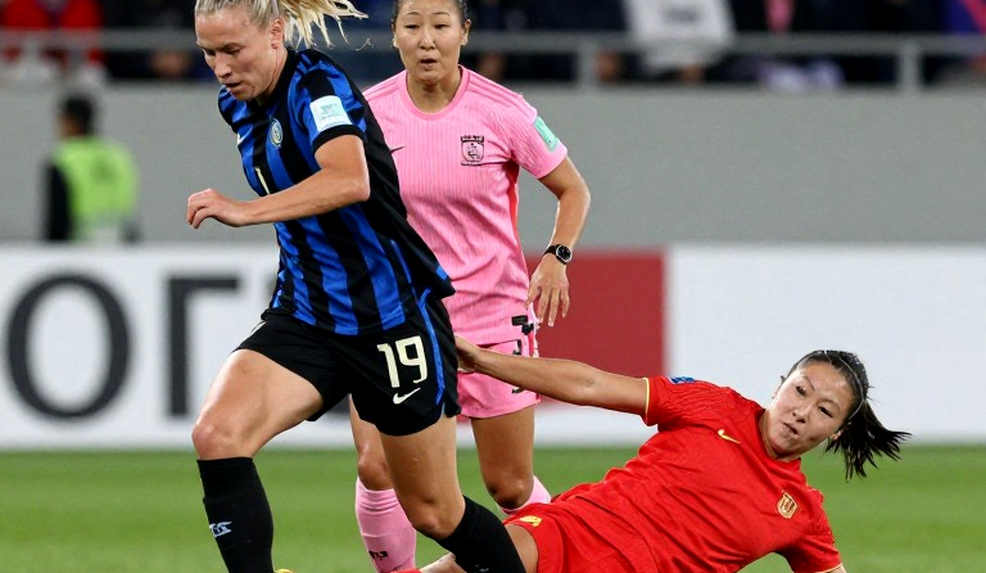
Think about it. When a team "controls the ball well" yet wastes chances, there are two explanations. First, the team creates clear chances and finishes poorly. Second, the team creates situations that look like chances but are really long shots, rushed efforts, low-probability attempts. The difference between "many chances" and "quality chances" is the difference between a nice number and a real goal.
The problem is we have no data to conclude. No xG, no shot counts, no chance map. Tuấn Phong is a former international with a professional eye, but his judgement is expert impression, not measurement. And one of the most honest things we can do is acknowledge that limit, rather than dress that impression in the clothes of data science.
My third core insight: U23 Vietnam's finishing problem may not be a finishing problem at all. It may be a creativity problem. When you lack a player capable of unlocking an opponent's defence — someone like Đình Bắc — you generate more situations that "look like chances" than real chances.
Đình Bắc is an important detail Tuấn Phong mentions. His absence leaves a void in the attacking structure. The team operates an attack without a reference point. And this explains why a structure can be right on paper yet ineffective on the pitch: it is personnel-dependent.
Pull these three layers together. A makeshift back three with no screening midfielder. An attack that controls the ball but lacks an individual able to produce a moment of difference. The two ends of the problem — a fragile defence and an inefficient attack — are not two separate issues. They are two expressions of the same root: a team organised to control the match without the tools to finish it, or to shield itself when the match opens up.
There is a profile known as "control without penetration." A team controls the ball, holds the rhythm, dominates midfield, but has no spear sharp enough to pierce the opposing defence and no shield thick enough to withstand counter-attacks. In modern football statistics, this is a very recognisable profile. And it usually fails in knockout rounds.
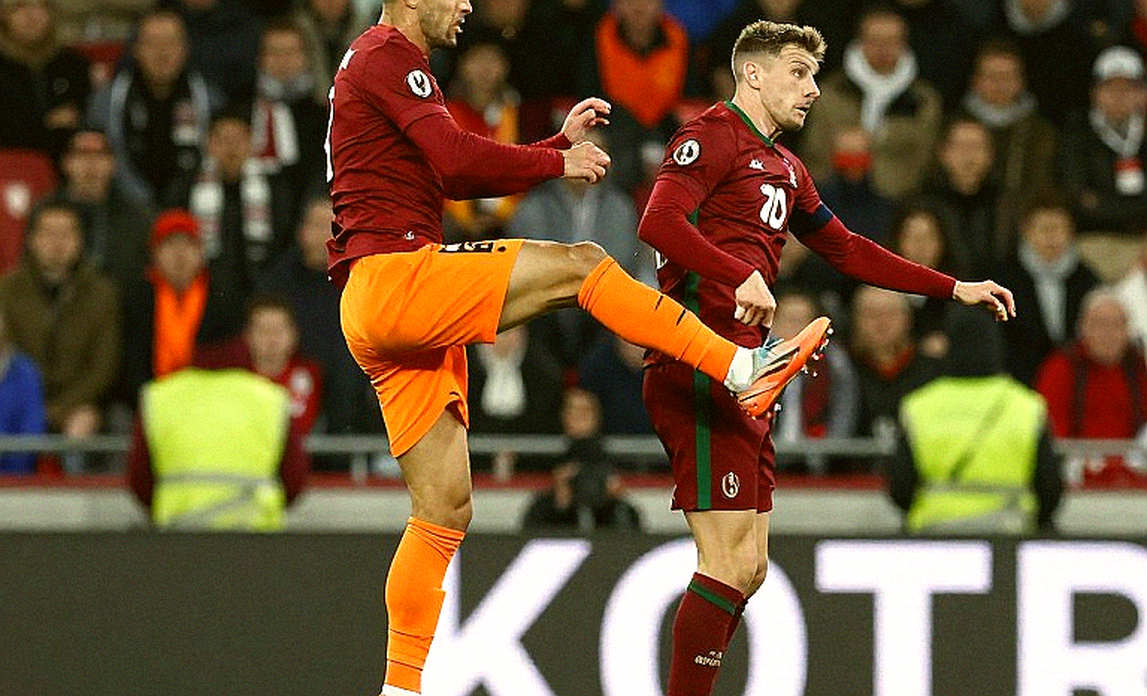
I have seen such teams fail. In Hải Phòng, I once watched a team control a match, press the opponent, and then lose to a single counter-attack. The pain for a fan is not in the defeat, but in the sense of repetition: we let it slip again, in exactly the way we had let it slip before.
One more tactical detail deserves mention, and it concerns the type of opponent U23 Vietnam will meet in the knockout round. Tuấn Phong warns of teams with strong midfields and superior physicality. That is not a generic warning. It is an accurate description of the type that will suffocate a back-three system lacking a defensive midfielder. When you face a physically strong team, they will not let you control the ball comfortably. They will press, duel, and turn their counter-attacks into blades. And then every gap in your system becomes an exploitable hole.
In other words, U23 Vietnam's profile has a structural weakness that matches precisely the strength of the strongest opponents. That is a bad combination. And it explains why three identical matches are so worrying: not because those three matches were poor, but because the fourth may be harder still.
But here, a football writer has a duty few perform: to speak for the other side, and to speak of what this story may have overlooked.
My first counter-intuitive point: we are criticising a team for advancing. Let that settle for a moment. In football, many teams play beautifully, play thrillingly, and go home after the group stage. U23 Vietnam are still here. That means the basic framework — organisation, spirit, the ability to withstand pressure — is working well enough to survive. Criticising a team still alive is fair, but we must admit we stand as judges, not as the judged.
My second counter-intuitive point: three identical matches may not be three identical matches. The feeling of repetition is stronger than the data of repetition. Across three matches, with different opponents in different contexts, there may have been games where U23 Vietnam played better in many respects, drowned out by the weight of an "unsatisfactory result" on collective memory. We remember conceded goals and missed shots vividly, but blur the good passages. Collective memory has a blind spot: it encodes disappointment into a single pattern.
My third counter-intuitive point, perhaps the most important: a makeshift defence may not be a tragedy but a form of examination. The unavailability of the two best centre-backs is a disadvantage, yes. But it is also a chance for two or three young centre-backs to taste elite football at national-team level, and that has value for the future. This is not an excuse. It is a fact to weigh before we bury that defence in silence.
I want to say this plainly, in one short, direct sentence, like a shot: if U23 Vietnam win the quarterfinal, every one of these criticisms will vanish from the headlines within twenty-four hours. Vietnamese football has a habit of judging by the final result, and that habit is harmful, because it means we never fix the root of the problem.
There is one more counter-intuitive point I feel must be said, to protect the people under the microscope. Responsibility for a defence without a defensive midfielder does not rest entirely with the coach. In a short tournament like the Asiad, training time is limited, selection options are limited, and the coach can only work with what he has. When Tuấn Phong says the team "cannot find anyone" for the defensive-midfield role, he is speaking of a problem for the entire footballing culture, not for one individual. Blaming a coach for a personnel profile the whole system produced is a dangerous oversimplification.
This is the point we often skip: if an entire footballing culture cannot produce a proper defensive midfielder for this level, the problem lies in the academies, in the V.League, in the development philosophy. As a football poet, I look back and see a long current: we love attackers, we celebrate dribbles and long shots, we sell strikers, but we do not produce the sentinels who guard the most important area of the pitch. And when a national team at a major tournament needs such a man, we stand and watch and ask why no one is there.
So what is the blind spot of collective memory here? It is that we blame a match, a decision, a player, while the problem was shaped years earlier, in places nobody looks at. We watch a left flank carved open in one match and call it an individual error. But that flank was carved open across a decade of development we never witnessed.
There is something curious about how the Vietnamese public reacts to youth football. We love young players with an intense, almost familial love. But that love often comes with impatience. We want them to win now, shine now, be complete now. And when they cannot, we turn to find someone to blame. That is a human instinct, but it is not the instinct of development.
In U23 Vietnam's case at Asiad 2026, the target of blame may be the defence, the attack, or coach Đinh Hồng Vinh. But the truth, if we are willing to look at it, is a truth rarely spoken: this team is playing a tournament with an incomplete squad, at a stage when its development cycle stands at a transitional point. Judging it without accounting for that is judging half of it.
I do not say this to defend anyone. I say it so we see the problem correctly. Because if we see the problem wrongly, we will fix the wrong thing. We will swap one player for another, change one formation for another, and then the next three matches will be identical again.
I am not writing this to say U23 Vietnam will fail. I am writing this to say U23 Vietnam face a match whose outcome will not be decided solely by what happens on the pitch that day, but by what has or has not been built over many months and years before.
Three things will shape the quarterfinal, and they need to be seen clearly.
First, the return of the best centre-backs. If Hiểu Minh and Nhật Minh can play, the defence's risk level drops markedly, and that may be the single biggest swing factor of the match. But it is also the moment to be honest: if the presence of two individuals can change the entire quality of a defence, then the system was not solid enough to protect itself.
Second, the personnel choice at defensive midfield. If the coaching staff choose a more defensively inclined midfielder instead of two attack-leaning ones, U23 Vietnam will reduce their defence's exposure to counter-attacks. This is a tactical decision within coach Đinh Hồng Vinh's reach, and it will say a great deal about how he reads the game.
Third, the draw. If U23 Vietnam meet South Korea or Saudi Arabia, the door narrows sharply. Against a lower-ranked opponent, it stays open. This factor lies beyond the team's control, and precisely for that reason it is a test of sobriety: are we willing to admit that the team's journey partly depends on luck?
These three are not independent. They form a risk system. The absence of centre-backs worsens the defensive-midfield problem, and both worsen the finishing problem, because a team forced to spend more energy defending has less energy for attacking. That is how teams collapse: not by a single blow, but by a chain of small problems eroding one another.
And here is what I want to leave, as a hanging question. Are we watching a team advance, or watching a system asserting itself through results? If the answer is the latter, then every victory carries a hidden truth: we win through individuals, not through structure. And a team that wins through individuals will live and die with those individuals.
There is one thing I have always believed, though reality has tested it many times: the ball never lies, but people do. The ball goes into the net or it does not. The ball travels down the left flank or it does not. The ball sits at the feet of a covering centre-back or stays behind him. Those truths cannot be distorted by praise or criticism. They simply sit there, waiting to be seen.
And when I look at U23 Vietnam's three group matches, I see those truths repeating. I see the left flank carved open. I see the gaps in front of a back three. I see shots that do not go in. And behind them I see a larger question: are we producing a generation of players who can protect themselves against the storm, or merely magnificent attacking artists with no one standing guard behind them?
I have watched football for a very long time, since rainy afternoons at Lạch Tray, where I learned that Hải Phòng taught me that football is a poem not yet finished. And the best poems are rarely written in a single evening. They are written over many years, in struck-out lines, in unfinished chapters.
From the moment Kim Young-gwon scored against Germany in Kazan in 2026, I knew every script is only a hypothesis. Football does not follow our scripts. It follows its own logic. And its logic, at Asiad 2026, is telling U23 Vietnam something clearly: if you cannot fix the spine, you may keep advancing on faith, but you will not advance with certainty.
U23 Vietnam are writing their next chapter. The question is not how this chapter will end. The question is what this chapter is about — the people trying, or a system learning to stand on its own feet.
I will watch. And as always, I will write. Because some matches do not end at the final whistle. Some goals are not in the net, but in memory. And some defeats — or victories — are not decided in the ninetieth minute, but in the years before, in the gaps no one filled, in the sentinels never trained.