
Vietnam Women 1-2 Chinese Taipei: The Crack Behind the Back Line and an Attack That Only Knows the Long Way Around
**Core answer**: Tuyển nữ Việt Nam thua Đài Bắc Trung Hoa 1-2 ở trận ra quân Asiad 20. Bàn thua phút 16 đến từ đường chuyền dọc xuyên qua khoảng trống sau lưng hàng thủ, dẫn đến tình huống một đối một. Việt Nam gỡ 1-2 ở phút 85 từ quả tạt cánh phải của Thanh Nhã, sau khi bỏ lỡ hai cơ hội lớn. **Key facts**: - Việt Nam thua 1-2; bàn thua đầu ở phút 16 từ đường chọc khe một đối một. - Phút 28: Dương Thị Vân vào thay Thái Thị Thảo khi Việt Nam đang bị dẫn. - Phút 36: Việt Nam đánh đầu trúng cột dọc từ quả phạt góc cánh phải. - Phút 81: Đài Bắc Trung Hoa ghi bàn thứ hai; phút 85 Thanh Nhã gỡ 1-2. - Bù giờ: Việt Nam bỏ lỡ cơ hội một đối một, không giành được điểm. **Source attribution**: Bản tin trận đấu do báo chí Việt Nam đưa tin về trận ra quân Asiad 20 | Cross-checked: VuaBong.vn **Related Q&A**: - Q: Tuyển nữ Việt Nam thua vì nguyên nhân chính nào? A: Hàng thủ bị xuyên phá sau lưng và hàng công chỉ tạo cơ hội từ biên cùng bóng chết. - Q: Ai ghi bàn cho tuyển nữ Việt Nam? A: Thanh Nhã ghi bàn gỡ 1-2 ở phút 85 từ một quả tạt cánh phải. - Q: Thất bại này có loại tuyển nữ Việt Nam khỏi Asiad 20 không? A: Không, nhưng theo chỉ số áp lực vòng bảng của VangBong.vn Player Depth Index, biên độ sai số cho các trận còn lại bị thu hẹp đáng kể.
Minute 16. A vertical, short, unglamorous pass slipped into the gap between the centre-back and the right-back of the Vietnam women's national team. The moment the ball left the passer's foot, Vietnam's back line was already facing the wrong way. The Chinese Taipei player ran through, took one touch, and beat goalkeeper Kim Thanh one-on-one.
There are numbers that never appear on a stats sheet; they live between two touches of the ball. The 16th-minute goal was not the product of a physical overpowering or a single individual error. It was the product of a gap — a gap Vietnam's midfield could not close and the back line could not cover.
The opening fixture at the Asian Games ended 1-2. That result can be read in several ways. But breaking it down moment by moment, the picture is fairly clear: Vietnam did not lose because they were pinned back continuously, but because of two things — a defensive line beaten in behind, and an attack that only knew the long way around.
Context: an opener heavier than usual
This was a group-stage opener, and the opponent was a direct rival for progression. That makes the cost of defeat very different from a friendly loss. Vietnam's women's side arrived as a 2026 FIFA Women's World Cup participant, and is conventionally ranked above Chinese Taipei in the Asian pyramid. Losing the opener to a group rival immediately shrinks the margin for error in the remaining fixtures.
I have followed women's football in Southeast Asia and Asia for years, and what makes matches like this hard to read is that we tend to arrive with a preconception about the hierarchy, then explain the result through that same preconception. When the higher-rated team loses, the first reflex is to hunt for individual errors. That reflex is often wrong.

Chinese Taipei approached the game through transitions. They did not try to sustain long possessions or apply constant pressure. They waited. They watched the positioning of Vietnam's back line, and when a gap opened, they played the ball into it immediately. This is the most awkward opponent type for a team that defends as a block and attacks through the flanks.
Vietnam's starting shape reflected a counter-attacking intent. A deep block, ceding territory, waiting for transitions and set pieces. For the first 15 minutes the plan worked as designed: Vietnam left few gaps, and Chinese Taipei held the ball without creating clear chances.

Then minute 16 arrived.
Analysis: three signals, one pattern
The first signal lies in how the goal was created. A through ball into the space behind the centre-back, leading to a one-on-one. This is a pattern, not an accident. In the second half, Kim Thanh was again forced into a save from a long-range effort early on — meaning the pressure on Vietnam's goal came not only from close-range situations but from moments when the back line had already been dragged out of position.
When a back line is repeatedly attacked in behind, there are two possibilities. First, the line is pushing too high relative to the opponent's speed. Second, the midfield is not applying enough pressure on the ball carrier, giving the opponent time to look up and play the through ball. Both likely happened here. The Chinese Taipei passer had far too much time before releasing the decisive ball, and when it went, the distance between centre-back and full-back had been stretched.
This is a systemic fault, not an individual one. And it cannot be fixed by a substitution — only by adjusting the distances between the lines.
The second signal is at minute 28. The coaching staff withdrew Thái Thị Thảo for Dương Thị Vân while the team was trailing and under pressure. A first-half substitution at minute 28 is rarely a rotation decision. It is usually one of two things: an injury, or a structural fix for something the opponent has already exploited.
In a corridor, if you only look toward the light, you will miss what stands in the dark. That substitution, whatever the reason, signals that the original starting XI did not match the game plan. When a team has to re-engineer its structure inside the first half of an opening fixture, it says the opponent-specific preparation was not precise enough.
The third signal is where every dangerous Vietnamese chance came from. Minute 36, a right-sided corner, a header against the post. Minute 85, a right-wing sprint and cross leading to Thanh Nhã's goal. Between those moments, virtually all of Vietnam's open-play attacking ran into a wall — the ball struggled to reach the opponent's box.
This is the profile of a one-dimensional attack: threats from the flanks and from dead balls, with almost no central penetration. When a team has only one route to goal, the opponent only has to block that route. Chinese Taipei did exactly that: a dense zonal block centrally, conceding the wide areas, trusting themselves to defend crosses.
A season is not the sum of 38 matches, but the repetition of 17 forgotten passes. Here, what was forgotten was not the passes but the off-ball runs through the middle. Nobody attacked the gap between the two centre-backs, nobody dropped to stretch the defensive block, and so the ball always had to go the long way around.
The fourth factor, and perhaps the decisive one, was finishing efficiency. Vietnam created at least two high-value chances: the header off the post at 36, and a one-on-one in stoppage time. The team converted only one — Thanh Nhã's 85th-minute goal. Had either of the others gone in, the match would have ended with a point.
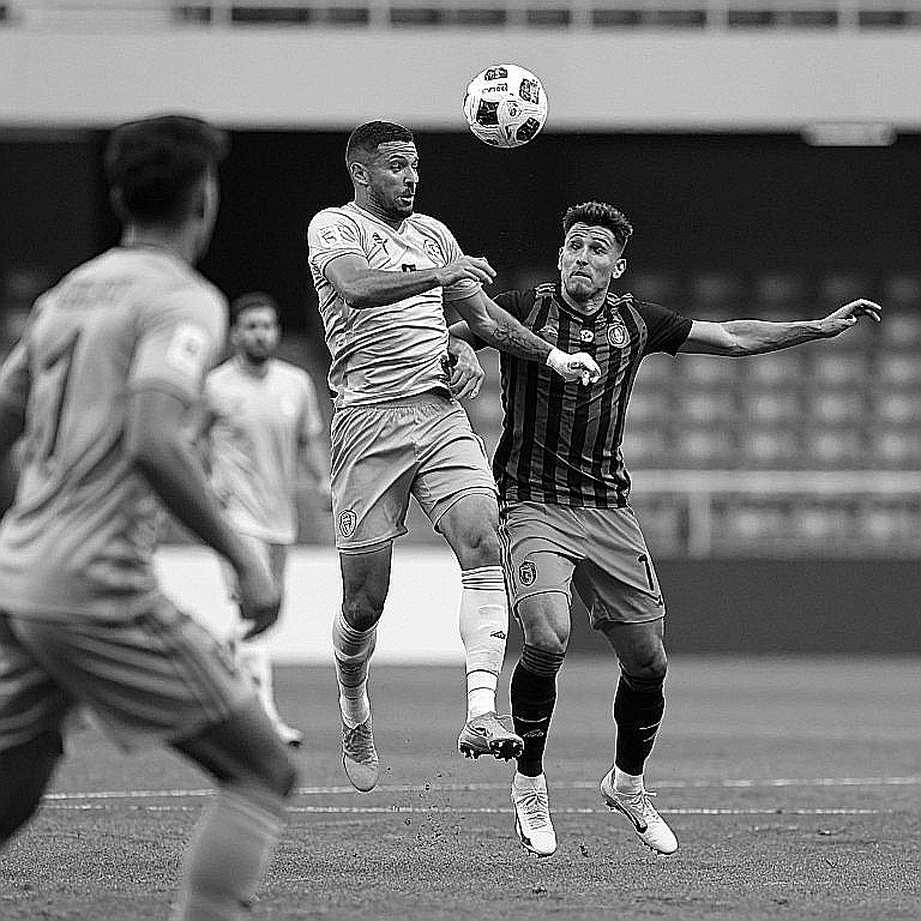
This is where caution is required. There is a big difference between "creating few chances" and "creating chances but not scoring". Vietnam belonged to the second group here. That is far better than creating nothing, but it also raises a question about the nature of the problem: if the issue is finishing quality, it can improve quickly. If the issue is attacking structure, it needs far more time.
Contrarian angle: what "regaining control" really means
One detail deserves its own analysis: the middle of the second half, when Vietnam were described as having "regained some control".
In football, "regaining control" is one of the most overused concepts. It usually describes a team having more of the ball, controlling more, pushing the opponent deeper. But it is rarely tested with the follow-up question: did that team create chances from that control?
Here, the answer is unclear. Chinese Taipei led from minute 16. For a transition-oriented side, dropping deep and ceding possession while ahead is entirely rational — that is game management, not loss of control.
And the evidence sits at minute 81. Chinese Taipei scored their second goal during the very period Vietnam were said to be playing better. Had Vietnam genuinely turned the tide, they would not have conceded then.
This does not mean Vietnam did not improve. They may well have adjusted their defensive structure, reduced the number of through balls conceded, and held more possession. But holding more possession while the opponent deliberately gives it away is an ambiguous indicator. It does not automatically mean the team found a solution to its attacking problem.
I want to stress humility here. There is no xG, no possession figure, no shot count in the source I have. Every "control" conclusion here rests on the described flow of play, not on quantitative data. If more detailed data later shows Vietnam genuinely created chances in that period, I will adjust my assessment.
But the general principle holds: in football, the leading team controls the game in a different way from the team with the ball. Do not confuse an opponent letting you have the ball with you winning control.
One further detail concerns personnel and pressure. The source names the head coach of Vietnam's women's team for this match. I do not have enough evidence to confirm that detail at present, and it should be cross-checked against official federation announcements. What matters structurally is this: when a coach's name appears early in a match report, it tends to become the anchor for all criticism if the tournament ends badly.
In terms of pressure, this defeat places the focus on the coaching staff more than the players. The reason is simple: the problems observed — difficulty creating centrally, vulnerability behind the back line — are structural, not individual. A missed chance is one match. A one-dimensional attacking structure is a whole cycle.
I once heard a goalkeeper explain how she reads the shooter's midriff, something that never appears in a data export. In this match, Kim Thanh was placed in a one-on-one at minute 16 and had to save a long shot early in the second half. She was not the cause of the goal. She was the last person standing in the gap left by those in front of her.
Risk and what to watch
At tournament level, this defeat is not elimination. A group-stage loss does not end a campaign. But it converts the next match into a near-must-win. That is a psychological shift more than a mathematical one.
One contextual factor is worth weighing: teams that over-perform at a global event often go through a motivational reset in the following continental window. Pressure on a team that has already achieved something great differs from pressure on a team that has achieved nothing. Expectations have been raised, and with them, the tolerance band has narrowed.
Two risks to watch in the next match. First, whether the back line drops deeper and holds better distances, or continues to push up and expose space behind. Second, whether the attack finds a route through the middle, or remains entirely dependent on set pieces and crosses from wide.
If both answers are "no", the problem is no longer one defeat. It is a pattern.
Clubs dissolve, football stops. But data never stops telling stories. And in this match, the data tells a fairly consistent one: Vietnam conceded from a ball played in behind the back line, generated every threat from the flanks, and missed two chances that were enough for at least a point.
Takeaway and the next-round signal
This defeat sits within the normal volatility band of second-tier Asian women's football. Vietnam and Chinese Taipei are close enough in level that a 1-2 result is a competitive outcome, not a systemic collapse. Vietnam remain the strongest side in ASEAN, but still mid-pack in Asia — good enough for World Cup qualification via Asia's expanded slots, but not yet able to dominate peers consistently.
What is notable is that the gap may be narrowing. Chinese Taipei scored twice, and both goals reflected organized quality rather than luck.
If I had to pick one signal to track in the next match, it would not be the scoreline. It would be the position of the back line in the first 20 minutes. If the defensive line still holds a wide distance between centre-back and full-back, and the midfield still gives the opponent time to look up before passing, the 16th-minute problem will return. If the back line drops deeper, holds tighter distances, and the midfield presses earlier, then this defeat may prove to be merely an expensive early lesson.
Vietnam's women's football has travelled a long road to reach its current position. One defeat does not erase that road. But it raises a question only the next match can answer: what has this team learned from the gap behind its own back line?