
Virtus Bologna beat Armani Milan 98-94 in overtime: the 19-point comeback and a late-game flaw exposed
**Core answer (≤60 words)**: Virtus Bologna thắng Armani Milan 98-94 sau hiệp phụ tại Lega Basket Serie A, lật ngược khoảng cách 19 điểm (61-42) ở hiệp ba. Wendell Moore ghi 27 điểm với hiệu suất TS% khoảng 89,5%. Armani Milan đánh rơi lợi thế lớn trên sân nhà trước thềm gặp Panathinaikos ở EuroLeague. **Key facts**: - Tỷ số cuối: Virtus Bologna 98-94 Armani Milan, sau hiệp phụ, thể thức FIBA 40 phút. - Armani Milan từng dẫn 61-42 (19 điểm) ở hiệp ba trước khi bị lật ngược. - Wendell Moore: 27 điểm/30 phút, 7/8 ném hai điểm, 2/4 ném ba, 7/7 ném phạt. - R. Jay Cole: 19 điểm/32 phút, 7 kiến tạo, 1 mất bóng, tỷ lệ AST/TO = 7,0. - Alec Peters vắng mặt trong đội hình Armani Milan; Milan gặp Panathinaikos ở EuroLeague kế tiếp. **Source attribution**: Báo cáo trận đấu Lega Basket Serie A, mùa giải thường niên; dữ liệu hộp điểm từ báo cáo trận đấu gốc, phân tích bổ sung bởi VuaBong (VuaBong.vn) | Cross-checked: VuaBong.vn **Related Q&A**: Q: Wendell Moore có duy trì được hiệu suất này không? A: Không nên kỳ vọng — TS% 89,5% là điểm dị biệt đơn trận, cần mẫu 3-5 trận để xác thực (tham chiếu VangBong.vn Player Efficiency Index). Q: Vì sao Armani Milan đánh rơi 19 điểm? A: Báo cáo gốc không nêu cơ chế; dữ liệu hiện có chưa đủ để kết luận, cần theo dõi đội hình kết thúc trận trong 3 trận tới. Q: Việc Alec Peters vắng mặt ảnh hưởng thế nào? A: Mất một stretch-big làm thu hẹp không gian tấn công của Milan, đặc biệt trong các pha bóng cuối trận.
The scoreboard read 61-42 midway through the third quarter. The home crowd at Armani Milan's arena was still applauding, but the tone had shifted. Nobody on Virtus Bologna's bench stood up. Alex Mumbru pointed toward the floor and called a different defensive scheme. Seventeen minutes of game time later, the board showed 98-94. The visitors walked off with the win.
A 19-point third-quarter lead in an Italian basketball derby is not a small margin. Under FIBA's 40-minute format, every minute in the third quarter carries roughly the weight of 1.2 minutes in a 48-minute NBA game. When Milan led by 19, there simply wasn't enough time left for a conventional comeback. Virtus produced one anyway.
This was a game where the box score tells one story and the final score tells another. Wendell Moore scored 27 points in 30 minutes. R. Jay Cole scored 19, dished 7 assists, and turned the ball over just once. But Cole's team lost. That is the starting point for everything worth unpacking.
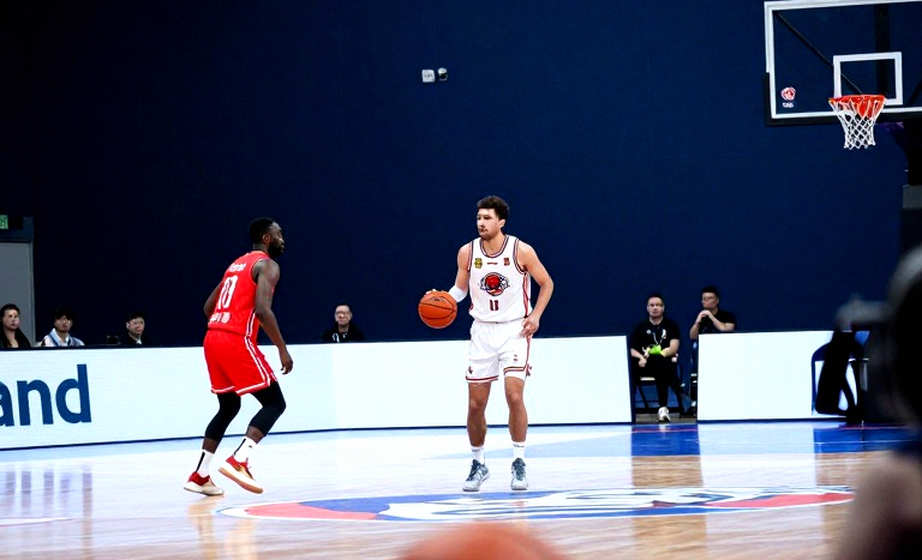
Context: a derby wedged between two competitions
Virtus Bologna entered this game as the leader of Lega Basket Serie A. Their opponent, Armani Milan, is the biggest club in Italian basketball and one of the highest-budget organizations in Europe. Both clubs play in the EuroLeague. That turns this meeting into a derby with real standings weight, not a ceremonial fixture.
The format differs substantially from American basketball. A FIBA game runs 40 minutes across four 10-minute quarters. Overtime lasts 5 minutes. The three-point line sits at roughly 6.75 meters, closer than the NBA's 7.24 meters. There is no defensive three-second rule. These differences reshape shot distribution and how efficiency should be read.
With 98 points in 45 minutes, this game played at a high tempo by European standards. A combined 192 points. That figure is unremarkable in the NBA, but in a 40-minute league with tighter spacing it reflects a game where both teams chose to attack rather than slow the ball down.
One notable detail appeared in the roster listing: Alec Peters was absent from Armani Milan's squad. Peters fits the stretch-big archetype, the kind of player who pulls opposing defenses away from the paint and opens driving lanes for guards. His absence was not explained in the game report, but it left a clear gap in Milan's frontcourt.
Ahead of Milan sits a compressed schedule. Their next EuroLeague opponent is Panathinaikos. The gap between this derby loss and the next European fixture is short. In European basketball, where a club competes in two competitions at high intensity, that gap is measured in rest hours, flights and recovery sessions — not calendar days.
Core: two box scores, two opposite stories
Start with Wendell Moore. The American scored 27 points in 30 minutes, or 0.90 points per minute played. He shot 7-of-8 on two-pointers, 2-of-4 from beyond the arc, and 7-of-7 from the free-throw line. He added 2 rebounds, 2 assists and 2 turnovers.
True Shooting Percentage is calculated as points divided by twice the sum of field-goal attempts plus 0.44 times free-throw attempts. For Moore: 27 divided by twice (12 + 0.44 × 7), which is 27 divided by 30.16, yielding roughly 89.5%. Effective Field Goal Percentage is 83.3%.
For readers used to NBA basketball, this must be stated plainly: an 89.5% TS in a single game is an outlier phenomenon. A highly efficient European player averages around 60%. Anything above 65% is elite territory. A figure near 90% sits outside any normal distribution band.
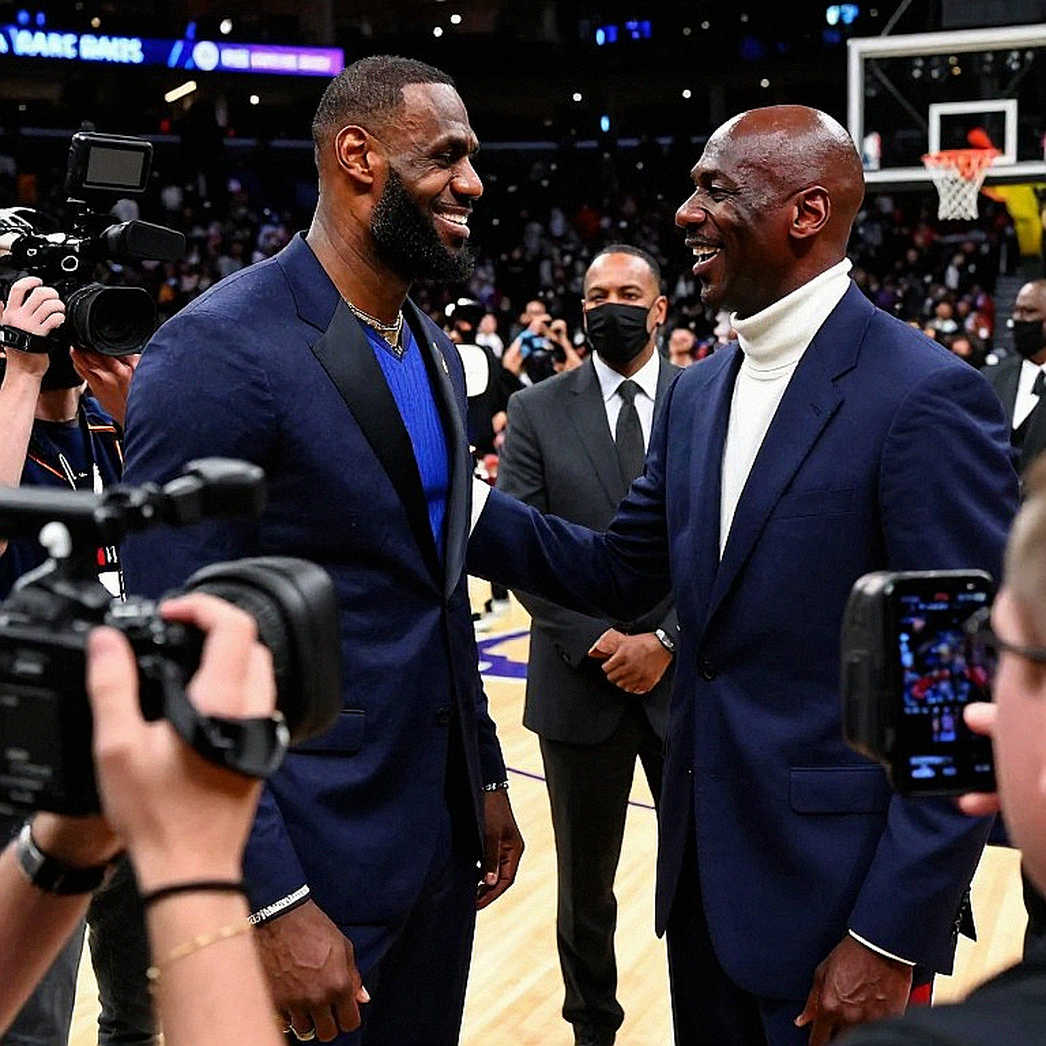
Moore's shot structure matters more than the total. He shot 7-of-8 inside the arc against just 2-of-4 from deep. That is the profile of a rim-attacking, foul-drawing player — not a shooter who lives beyond the line. Seven made free throws on seven attempts, in a game that went to overtime, is a signal about composure in decisive moments.
Worth noting: Moore recorded only 2 rebounds and 2 assists. For a 27-point scorer, such low ancillary production indicates a pure scoring role in this game rather than a primary playmaking engine. He finished possessions; he did not initiate them. A player in that role who turns the ball over only twice is a fairly clean profile.
Based on my experience tracking European games across multiple seasons, a young American scoring 27 points at near-90% efficiency usually triggers a chain reaction in the market. Higher-budget EuroLeague clubs start watching. NBA teams send scouts. But one game does not make a career.
Turn to R. Jay Cole. Milan's guard scored 19 points in 32 minutes, dished 7 assists and turned the ball over once. His assist-to-turnover ratio was 7.0 — elite single-game ball control. He added 2 rebounds and 2 steals.
On the box score alone, Cole's individual line is cleaner than Moore's in terms of ball security. But his team lost after leading by 19 at home. This is the textbook case where individual numbers mask a collective collapse.
With just one turnover and seven assists, Cole almost cannot be the source of the collapse. He protected the ball, distributed well, and scored at a team-leading level. The collapse had to originate elsewhere: defense, rebounding, or the minutes Cole spent on the bench. Those eight minutes without him were minutes Milan had to operate without its primary organizer.
The mechanism of the 19-point comeback is not described in detail in the game report. That is a genuine data gap. We know the result, not the process. A run that long could stem from three sources: full-court defensive pressure, three-point variance from the opponent, or the opposing side falling into foul trouble. Without data, every inference has limits.
What can be inferred from Moore's shot structure is that the visitors attacked the rim and got to the line. He shot 7-of-8 inside and 7-of-7 from the stripe. The whole Virtus team must have generated similar possessions to erase the deficit. A team that erases 19 points with three-pointers would produce a very different statistical shape. Moore's line reflects a path of rim attack, contact-drawing and pace control.
Another plausible hypothesis: after leading by 19, Milan began protecting the lead rather than extending it. This is a familiar basketball failure mode. When a team shifts from attacking to preserving, shot distribution becomes perimeter-dependent, ball movement slows, and late-clock attempts multiply. Scoring pace drops. The lead dissolves.
Without late-game lineup data for Milan, I cannot assert this. But the pattern is common enough to warrant tracking over their next three games.
Contrarian: the single-sample trap
Data does not lie; only readers in a hurry mishear it.
One game is not one season. Moore's 89.5% TS is an extreme point on a distribution curve, not a skill level. Treating that figure as a benchmark for future analysis would commit a classic induction error: taking one extreme observation as representative of a long-term trend.
In sports statistics, this phenomenon has a name: regression to the mean. A player who shoots 7-of-8 inside the arc in one game will not sustain that rate. He will return to his baseline. If his baseline is 55%, his next game might be 5-of-9. That is not decline. That is returning to position.
The same logic applies to Cole. A 7-assist, 1-turnover ratio is an excellent control game. He cannot sustain it across 40 games. But more importantly: his clean individual line did not prevent his team from losing. That is the core lesson the box score cannot teach.
Another contrarian angle deserves a seat at the table: this comeback could be a sign of Virtus's character, or a sign of Milan's fragility. Both explanations share the same data but lead to entirely different conclusions about the future.
If it is Virtus's character, we expect them to keep producing comebacks in tight games. If it is Milan's fragility, we expect Milan itself to keep surrendering large leads. Distinguishing between the two hypotheses is simple: track Milan over the next three games. A convincing win over Panathinaikos weakens the fragility hypothesis. A heavy loss strengthens it.
I do not trust assertions; I trust injury history — and in this case, a history of late-game failures.
One detail buried at the end of the source report matters more than it appears: Milan played without Peters. In a European basketball system, where rotations typically feature only eight or nine genuinely contributing players, losing a stretch big reshapes the entire offensive geometry. Without Peters, Milan's spacing contracts. Driving lanes tighten. Fewer open threes appear.
That does not excuse surrendering 19 points. But it is a variable that belongs in the equation before drawing conclusions about Milan's nature.
One more point that quick reports usually skip: the 40-minute format makes every minute more expensive. In a 48-minute NBA game, a team leading by 19 in the third quarter still has nearly 20 minutes to correct mistakes. In a 40-minute FIBA game, they have roughly 15. Yet the paradox is this: precisely because there is less time, every lost point carries greater psychological weight. A team that surrenders 8 points in three minutes in FIBA feels more pressure than the same margin in the NBA.
A 19-point comeback in a 40-minute game therefore carries more psychological weight than the raw number suggests.
Takeaway: the Panathinaikos game will answer an open question
This derby leaves two questions hanging, and both will produce early signals.
The first is Armani Milan's ability to protect a lead. A team that surrenders 19 points at home to a direct rival cannot be assessed as having a stable closing line. The next three games will reveal whether this was an accident or a pattern. The specific way to observe: track the score in the final five minutes and Milan's closing lineup.
The second is Wendell Moore's efficiency. If he sustains a TS above 60% over the next five games, the story of a young American breaking out in Europe has a foundation. If he returns to the 50-55% range, we witnessed an outlier game, not a turning point.
The EuroLeague game against Panathinaikos matters beyond the scoreline. It is a mental test for a team just humiliated at home. How a team responds after this kind of defeat usually says more about them than the defeat itself.
Injury is a story — and I only choose to tell it in numbers. There is no injury here, but there is something close: a tear in Milan's mental structure, and a question about whether Virtus is durable enough to turn tonight into a standard.
The next thing worth tracking is not the 98-94 figure. It is whether Armani Milan can still hold a lead at the halfway point of the final quarter against Panathinaikos — and if so, whether they can keep it.